

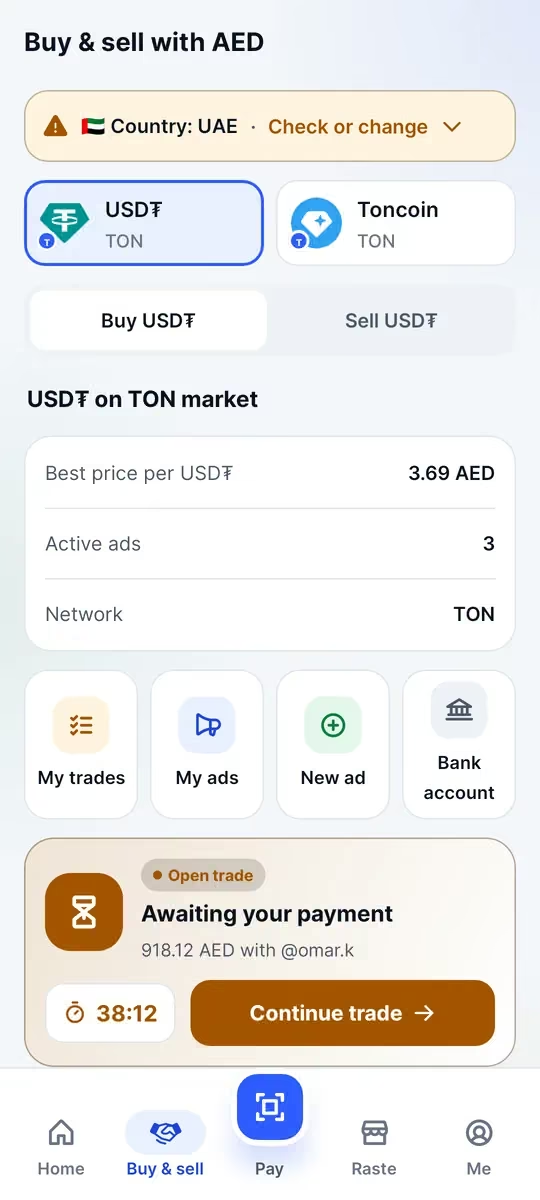
How a P2P trade works
Every trade is between two users. Waletifi provides the escrow contract and the dispute process; it does not buy or sell the USDT itself.
- You pick an ad and open a trade. The seller’s USDT is locked in an on-chain escrow contract.
- You pay the seller in your local currency by bank transfer or a local payment method. Their payment details are shown only once the escrow is funded.
- The seller confirms they received the money, and the escrow releases the USDT to your wallet.
- If something goes wrong, either side can open a dispute. People review it and the escrow is resolved to the buyer or the seller.
Why escrow matters
P2P trading without escrow invites two classic scams: the buyer pays but never receives the crypto, or the seller sends crypto but never gets paid. With the USDT locked in a smart contract, the seller cannot walk away with it after you pay, and the buyer only gets it once the payment is confirmed or a dispute is settled.
Escrow does not remove every risk. Pay only from your own bank account, follow the trade steps, and never release or pay outside the app.
Identity verification for P2P
The wallet itself needs no identity check. P2P trading with local currency does: you verify with a national ID or passport, because bank money moves and the bank account you pay from or get paid to must be in your own name. This also protects you from receiving money from a stranger’s account.
Fees and availability
P2P fees are shown in your local currency before you confirm, together with the rate and the exact USDT amount.
P2P depends on your country and needs a fresh local-currency rate, so it is not available everywhere. The app shows whether it is available where you live.